Playroom Wall Art: Best Picks for 2026 (Buy Guide)
Picking playroom wall art means balancing two things that usually fight each other: durability that survives sticky fingers and stray soccer balls, and a look that still feels curated instead of like clip art. This guide breaks down what actually holds up in a kids' playroom and names specific prints worth the wall space in 2026.
- Canvas prints beat framed glass for playroom wall art — no shatter risk when a toy connects with the wall.
- Hang the visual center at 40-45 inches, not the standard 57-inch adult eye line, for a 3-to-8-year-old's sightline.
- Summer Beach Fun is the safe pick for shared family playrooms in 2026 — Buy.
- Wild Pop works as a bold accent wall but can overwhelm a small room — Consider.
- Skip anything glass-framed within arm's reach of a toddler who climbs furniture.
Why this matters
A playroom gets more physical contact than any other room in the house — thrown blocks, dragged furniture, hands with paint on them. Wall art that works in a formal living room can fail here in a week. Gioia Wall Art stocks over 6,000 curated prints, and a meaningful chunk of them translate well into a playroom setting once you filter for the right material and mood — this guide does that filtering for you.
Getting playroom wall art wrong costs more than a wasted print. A shattered glass frame is a safety incident, not just a design miss, and a room papered in babyish themes gets outgrown by age six. The goal for 2026 is art that survives daily use and still looks intentional five years from now.
Who this is for
This guide is for parents decorating a dedicated playroom or a shared kids' space, plus interior designers sourcing for a family client where the room needs to handle rough play, sensory stimulation, and a range of ages from toddler to early elementary. It also applies to nursery buyers planning ahead for a room that will become a playroom in two or three years.
What to look for in playroom wall art
Surface material that survives contact
Canvas prints handle bumps that framed glass cannot. A stray ball or a toddler's climbing attempt against a canvas print means a dent at worst; against glass, it means a shattered frame and a cleanup with kids in the room. For a space built around physical play, material choice is the first filter, not an afterthought.
Hanging height for a kid's sightline
Standard adult eye-level hanging puts the center of a piece at 57 inches from the floor. A 3-to-8-year-old's eye line sits closer to 40-45 inches. Art hung at adult height reads as decoration for the parents, not for the kids who actually use the room — drop it down.
Color and mood that energizes without overstimulating
Bright, saturated palettes read as playful, but a wall covered in five clashing colors and busy patterns can overstimulate a room already full of toys and noise. Pick one or two dominant colors per wall and let the rest of the room's clutter provide the visual variety.
Themes with a few years of runway
A piece themed tightly around a single character or a very specific age (think alphabet blocks for a one-year-old) gets outgrown fast. Loose themes — animals, adventure, nature, abstract shapes — stretch across a wider age range and save you from a re-decorate in 18 months.
Scale relative to the play zone
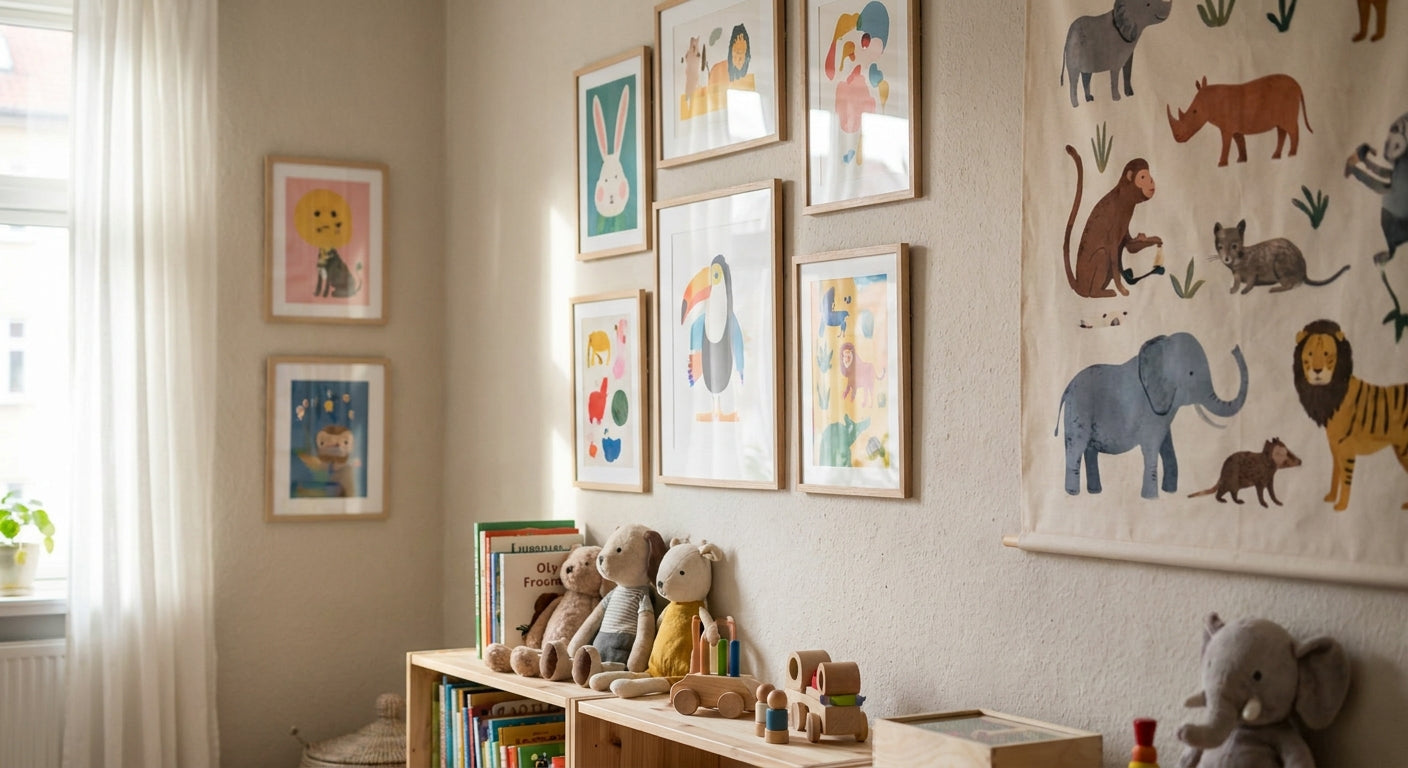
A single oversized statement piece works in a living room but competes badly with shelving, toy bins, and floor mats in a playroom. Multiple smaller or mid-size pieces arranged as a gallery wall tend to fit better around furniture that shifts constantly.
Safety at climbing height
Kids climb bookshelves, chairs, and each other. Any print hung within reach of a climbing toddler needs a frameless or lightweight mount — no glass, no heavy wood frame that can tip forward if grabbed.
“If the frame has glass, it doesn't belong within arm's reach of a toddler who climbs furniture.”
Top picks for 2026
Summer Beach Fun — the safe pick. This print leans into a bright, universally-loved beach theme that works for a shared playroom with kids at different ages, and it comes as a canvas print rather than glass-framed, which matters most in a high-contact room. Verdict: Buy.
Wild Pop — the wildcard. Bold, saturated pop-art color blocking gives a playroom real personality and photographs well for the parent who wants the room to look intentional in family photos, but the intensity of color can crowd a smaller space if paired with busy toy storage. Verdict: Consider — use it as a single accent wall, not the whole room.
Surf Cow Boy — the adventure pick. The surf-meets-western mashup theme gives active kids a sense of motion and story without locking the room into a single narrow age bracket, and the loose theme has runway past the toddler years. Verdict: Buy.
Cowgirl 1 — a bonus theme-matcher if you're already leaning western or ranch-style in the nursery-to-playroom transition. It pairs naturally with Surf Cow Boy for a gallery wall but works as a standalone anchor piece too. Verdict: Consider.
Browse the full Summer Beach Fun print, the Wild Pop print, and the Surf Cow Boy print directly to compare finishes and sizing options for your wall.
What to avoid
- Large glass-framed mirrors or prints hung low — they look elegant in a showroom photo but turn into a hazard the moment a toddler pulls on furniture to reach them.
- Heavy oversized wood frames — top-heavy pieces can tip forward if a child grabs the bottom edge, and they're harder to re-hang as the room's layout shifts.
- Very narrow-age themes with dark, moody palettes — art built for a nursery's calm-down corner or a single character phase gets outgrown fast and clashes with the higher-energy mood most playrooms need by year two.
Verdict comparison
| Pick | Best for | Material note | Hanging height | Verdict |
|---|---|---|---|---|
| Summer Beach Fun | Shared family playrooms | Canvas, no glass | 40-45 in center | Buy |
| Wild Pop | Single accent wall | Canvas, bold color | 40-45 in center | Consider |
| Surf Cow Boy | Active, adventure-themed rooms | Canvas, no glass | 40-45 in center | Buy |
| Cowgirl 1 | Western/ranch gallery pairing | Canvas, no glass | 40-45 in center | Consider |
FAQ
What's the best wall art for a playroom in 2026?
Canvas prints with bright, loosely-themed imagery are the best playroom wall art in 2026 because they survive contact and don't lock the room into one narrow age range. Summer Beach Fun and Surf Cow Boy both fit that brief and carry a Buy verdict.
Is canvas better than framed glass for kids' rooms?
Yes, canvas is safer and more durable than framed glass for a playroom. Glass shatters on impact from thrown toys or falls, while canvas absorbs the hit with at most a dent.
How high should I hang wall art in a playroom?
Hang the visual center around 40-45 inches from the floor, lower than the standard 57-inch adult eye line. That height matches the sightline of a 3-to-8-year-old, who is the room's actual audience.
Can playroom wall art double as nursery decor?
Yes, if you pick loosely-themed pieces rather than nursery-specific imagery like alphabet blocks. Themes such as adventure, animals, or coastal scenes carry a room from nursery through early elementary without a full redecorate.
Is glass-framed art safe for toddlers?
Glass-framed art is not recommended within arm's reach of a toddler who climbs furniture. Choose canvas prints for any wall a young child can physically reach.
What themes work best for a shared playroom?
Adventure, coastal, and animal themes work best for a shared playroom because they read as playful across a wide age range without skewing too babyish or too mature. Surf Cow Boy and Summer Beach Fun both use this loose-theme approach.
Should playroom art match the rest of the house?
It helps but isn't required — a playroom can carry a bolder palette than the rest of the home as long as one or two dominant colors tie it back to an adjacent hallway or living space.
How many pieces should go on one playroom wall?
Two to four mid-size pieces in a gallery arrangement generally work better than one oversized statement piece, since playroom furniture and toy storage shift constantly and compete with a single large anchor print.
One last thing
The detail most people skip: re-check hanging height every 12-18 months as kids grow. A piece hung perfectly for a 3-year-old's sightline in 2026 will sit too low for the same child by 2028 — treat playroom wall art as something you adjust, not something you install once and forget.